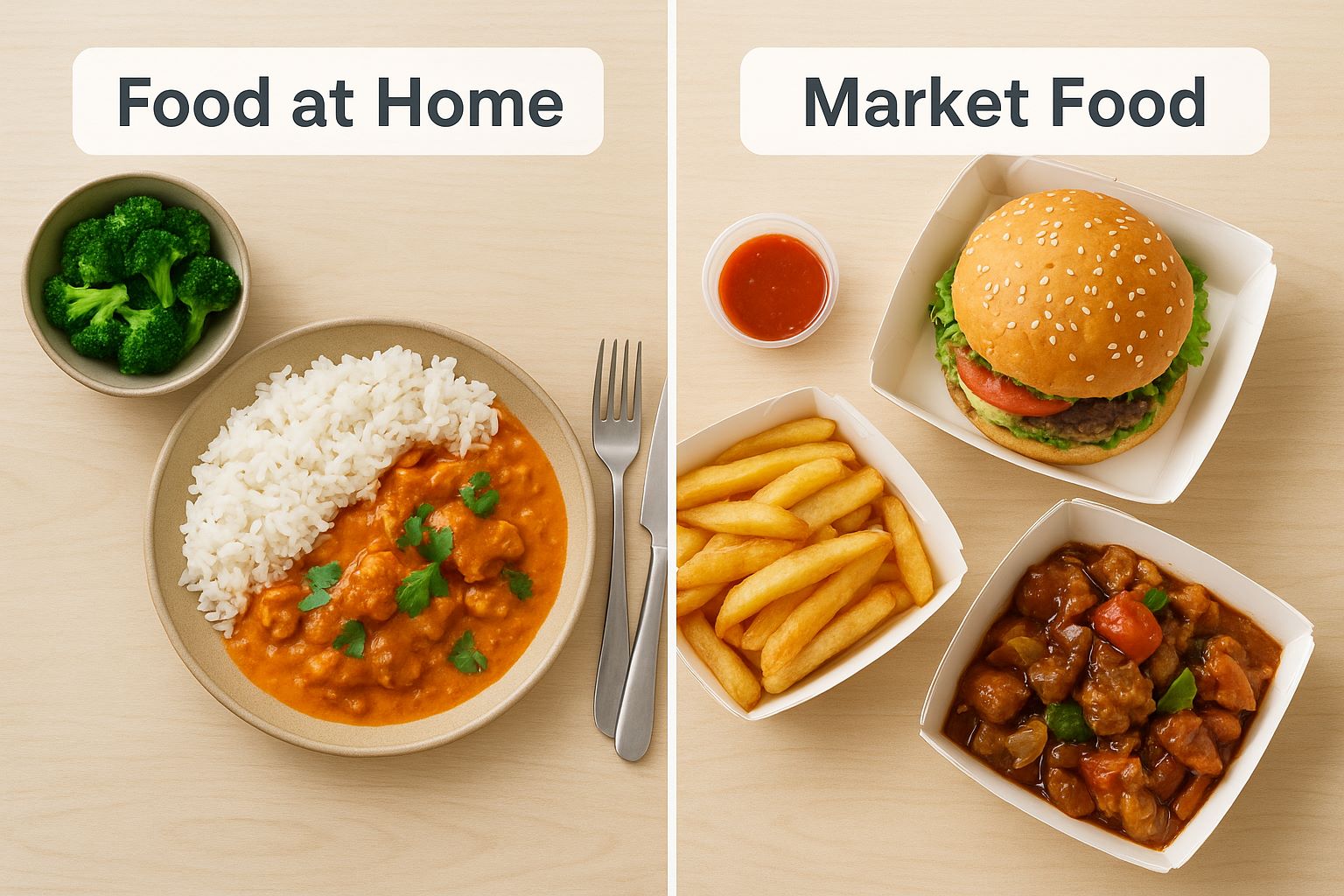
🍽️ Food at Home vs Market Food: Cost, Health and What’s Best for Your Family
Summary: This article compares home-cooked food with market/restaurant food (takeout and street food) in simple words: home cooking is usually cheaper, healthier and safer if done well, while market food wins on convenience and variety. We explain the true costs, health factors, safety tips, and practical advice so you can choose what works best for your budget, time and family.
💸 Cost: What’s Cheaper?
Generally, cooking at home costs less per meal. Buying raw ingredients (rice, vegetables, pulses, chicken) and cooking a few portions typically gives you more meals for the same money than buying ready-made meals from markets or restaurants.
- Home-cooked: Lower cost per plate when you cook in bulk and reuse ingredients.
- Market/restaurant: More expensive because you pay for labour, rent, and convenience.
Quick cost tip
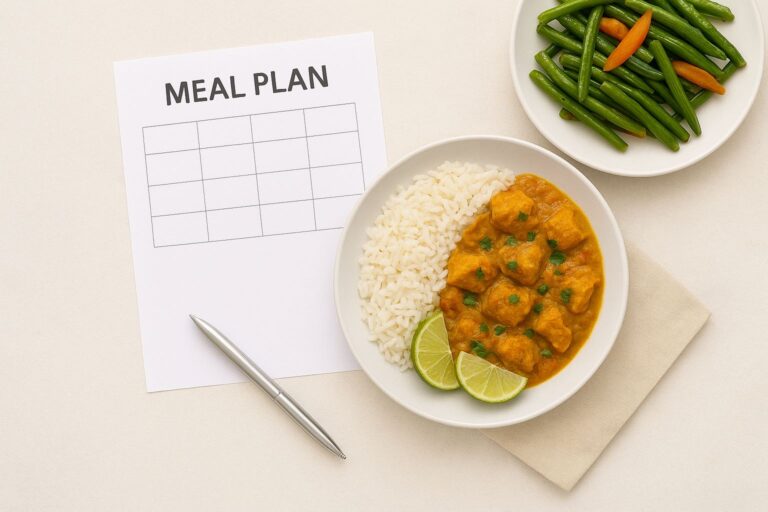
Plan a simple weekly menu and buy ingredients in bulk. This lowers cost and reduces waste.
🥗 Health: Which Is Better?
Home cooking gives you control over ingredients and portion sizes — so it can be much healthier. You can control oil, salt, sugar and choose fresh vegetables.
- Home-cooked: Easier to make balanced meals, include more vegetables, and avoid excess oil or salt.
- Market/restaurant: Tastes good and has variety, but dishes can be high in oil, salt, and hidden sugar. Street food quality varies widely.
🧼 Safety & Hygiene
Food safety depends on how and where food is prepared.
- Home: If you use clean water, wash hands and store food correctly, home-cooked food is usually safer.
- Market/restaurant: Reputable restaurants usually follow safety rules, but street vendors might not have good storage or clean water — so choose carefully.
Safety checklist for market food
- Buy from busy stalls (high turnover usually means fresher food).
- Check how food is stored — avoid food left in the open for long hours.
- Avoid raw salads from street vendors if you are unsure about clean water.
⏳ Convenience & Time
If you’re busy, market food is fast and saves time. Home cooking takes time — but small changes can make it easier.
- Home-cooked: Batch cook (make extra and refrigerate/freezer portions). Use simple recipes with few ingredients.
- Market/restaurant: Best for one-off meals, special occasions, or when you have no time to cook.
🌍 Variety & Taste
Markets and restaurants offer a wide range of flavours and dishes you may not cook at home. This makes eating out enjoyable and good for trying new foods. Home cooks can slowly add variety by learning a few easy dishes each week.
♻️ Waste & Environment
Home cooking usually produces less packaging waste than takeout. Using reusable containers, shopping with a list, and buying loose produce reduces waste and cost.
✅ Practical Guide: When to Cook at Home and When to Buy
| Situation | Best Choice | Why |
|---|---|---|
| Daily family meals | Cook at home | Cheaper and healthier when planned. |
| Busy workday or emergency | Buy from trusted market/restaurant | Saves time and effort. |
| Weekend treat or celebration | Eat out or order | Variety and enjoyment. |
💡 Simple Tips to Save Time and Eat Healthy at Home
- Batch cook: Make a big pot of curry or daal and use it for 2–3 meals.
- Use simple recipes with 5–6 ingredients.
- Prep vegetables once a week and store them in the fridge.
- Freeze portions in labeled containers for quick reheat meals.
- Keep a few easy “backup” recipes (eggs, stir-fry, lentils) for busy days.
💬 Final Thoughts
Both home-cooked and market food have their place. For daily health and budget, cooking at home usually wins. For convenience, taste variety, and saving time, the market or restaurants are useful. The best approach is balance: cook most meals at home, but enjoy market food sometimes — responsibly and from trusted places.
📣 Want More Practical Tips?
🔸 Try this: Start with one home-cooked meal per day and gradually increase. Share your favourite quick recipes in the comments and we’ll publish a simple weekly meal plan.